This sounds right! Talk with school Corcho Sur and Canto Veracruz

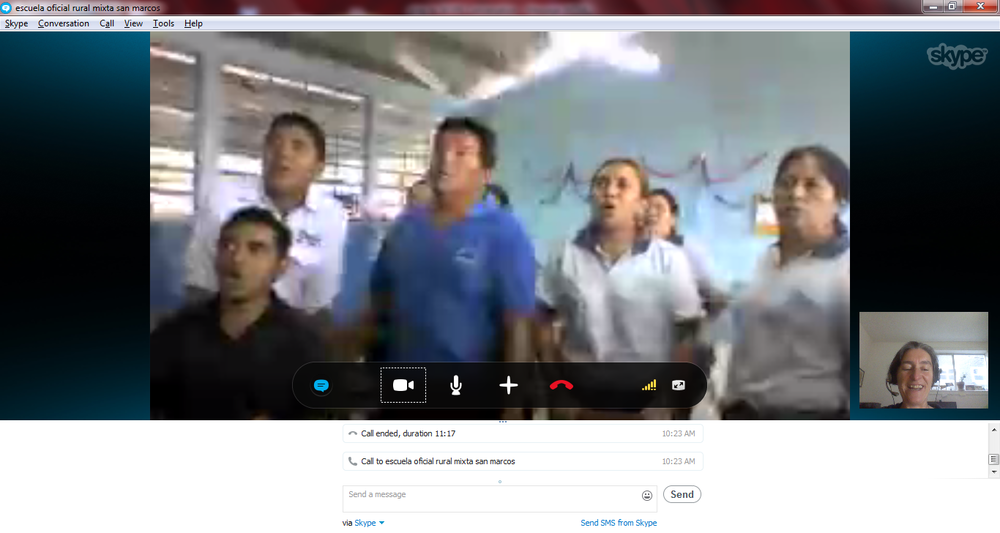
In order to participate in our skype conversation, the teachers of Canto Veracruz had to move a block outside of the school, to get a better signal. (Yes, a talk with the provider, Claro, is in order). That's why the teachers are sitting on the ground outside, rather than in a classroom.

Through sharing screen, we located the area of the school, and we learn that it would take 1,160h to walk from Veracruz to Seattle.

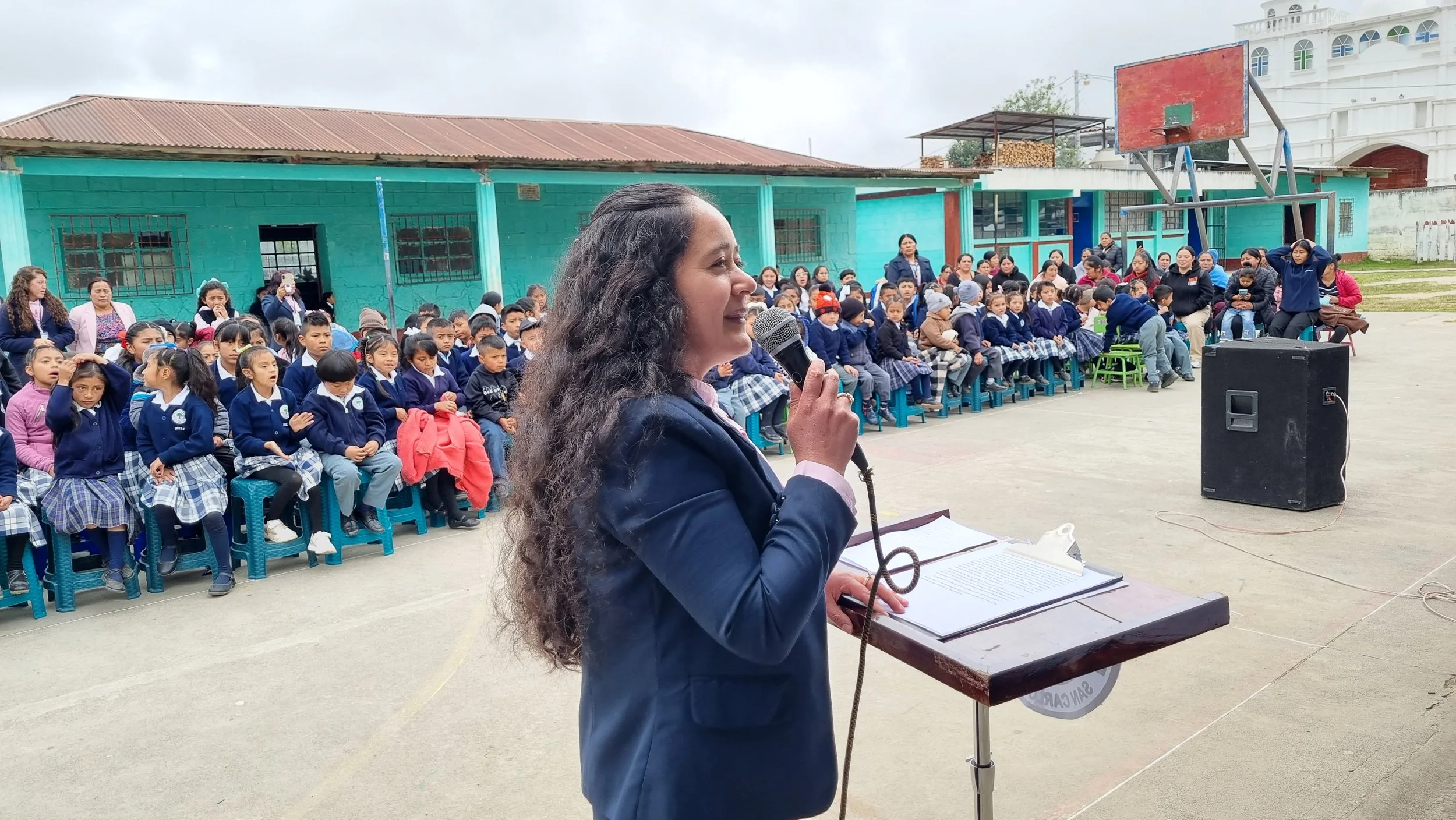
100% of the parents and 50% of the students at Canton Veracruz speak Mayan. We talked about the difficulty to find material that is pertinant to the language and the culture. The idea came up that it might be possible for the students, with the help of the Maya language teacher and the teacher of Expression artistica to create one or several small videos, where the students would be able to show some of their learning of their culture. This video could then be share with other schools in the region that are of Mayan ethnic and culture. Students as teachers, and creating lacking material for the students to understand their roots and culture... this sounds right!

La escuela Veracruz has already created a

blog

, and the entry of March 1st talks about TINFA. Sweet!

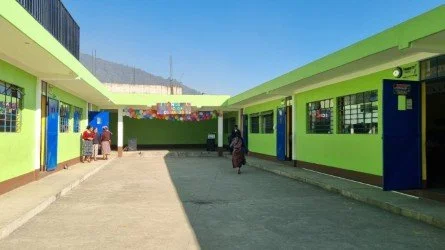
Tomorow they are inaugurating a new building, a classroom where they will have the technology kit.

After talking to all 3 schools, it feels like we have a nice way forward.  We are going to use the vocabulary and grammar of lessons 1 to 3 of

EnglishAnyone

to practice. Yes, yes, it is right. We are talking about flipped classrooms, where the teachers will watch and study, and we will use the "class"/skype time to practice. This sounds right too! 

English resources for schools in Guatemala

This week, I am talking to the teachers of each of the 3 schools we are working with in Guatemala.

Many students come to the school with a maternal language that is not Spanish. In the area of San
Marco, it is usually QueTche. The school district, FUNDAP and the teachers welcome this maternal language to the schol, and teach the younger grades in this language, as it is both part of the heritage of the child, it makes school more welcoming for the student and also for the parent.
As part of the curriculum, Students are also introduced to a 2nd language. That language is usually Spanish. It can also be English.
The teachers however, do not have much material, nor foundation on English. So the purpose of this week's conversation is to find the right material to support hte teachers i.

 The resources we are looking for need to have the following caracteristiques:
  • Level of Basic to Intermediate English
  • Suitable for Elementary school students
  • Free
  • Downloadable
  • The same material for the teacher to learn than for the student to learn (aka: no ESL).

The best resource I have found so far is EnglishAnyone. It is simple, but clear, 2 to 8 min videos that cover some of the fundamentals of the English language. It can be downloaded. It is not specfically targetted to 3rd to 6th graders though. If you know of other resources, I am interested. 

At the end of the discussion, the teachers informed me that they had composed a song, related to the computers (2) and virtual connection that they now have thanks to TINFA. 

 Such gratefulness is amazing, almost overwhelming. 


Visit to Juan de la Barrera in Mexico

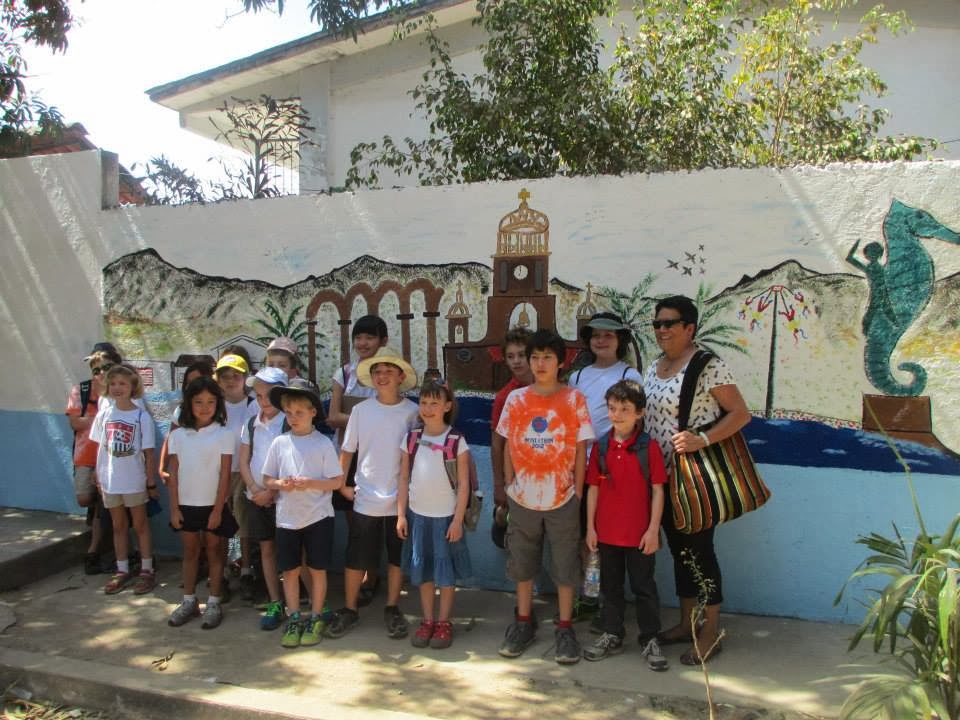
This week, families of the John Stanford International school in Seattle, were visiting their sister school in the outskirt of Puerto Vallarta: Escuela Primaria Juan de la Barrera.


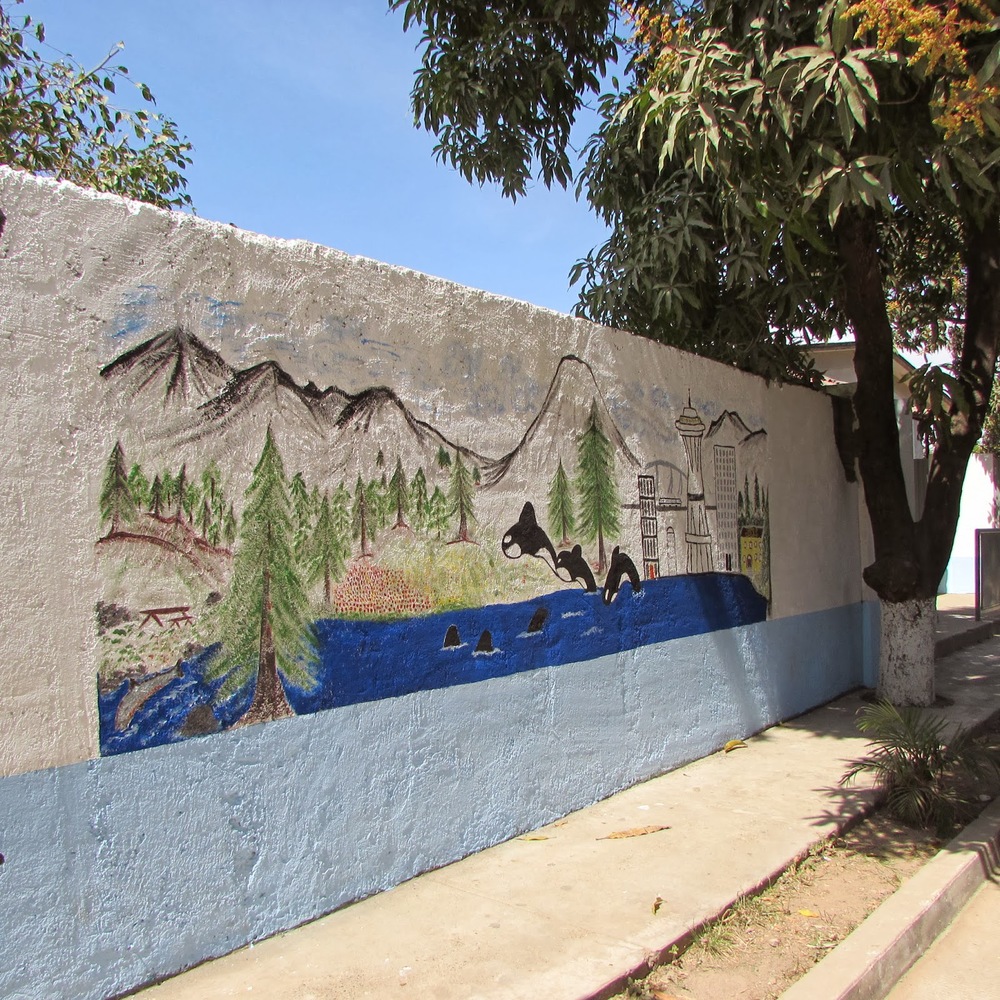
The American kids (about 15 students) joined their counterparts in classes in the morning, while the parents did some work for the school. This year, it was a mural depicting the exchange in between the 2 schools (the symbols of Puerto Vallarta on one side, and the symbols of Seattle on the other).


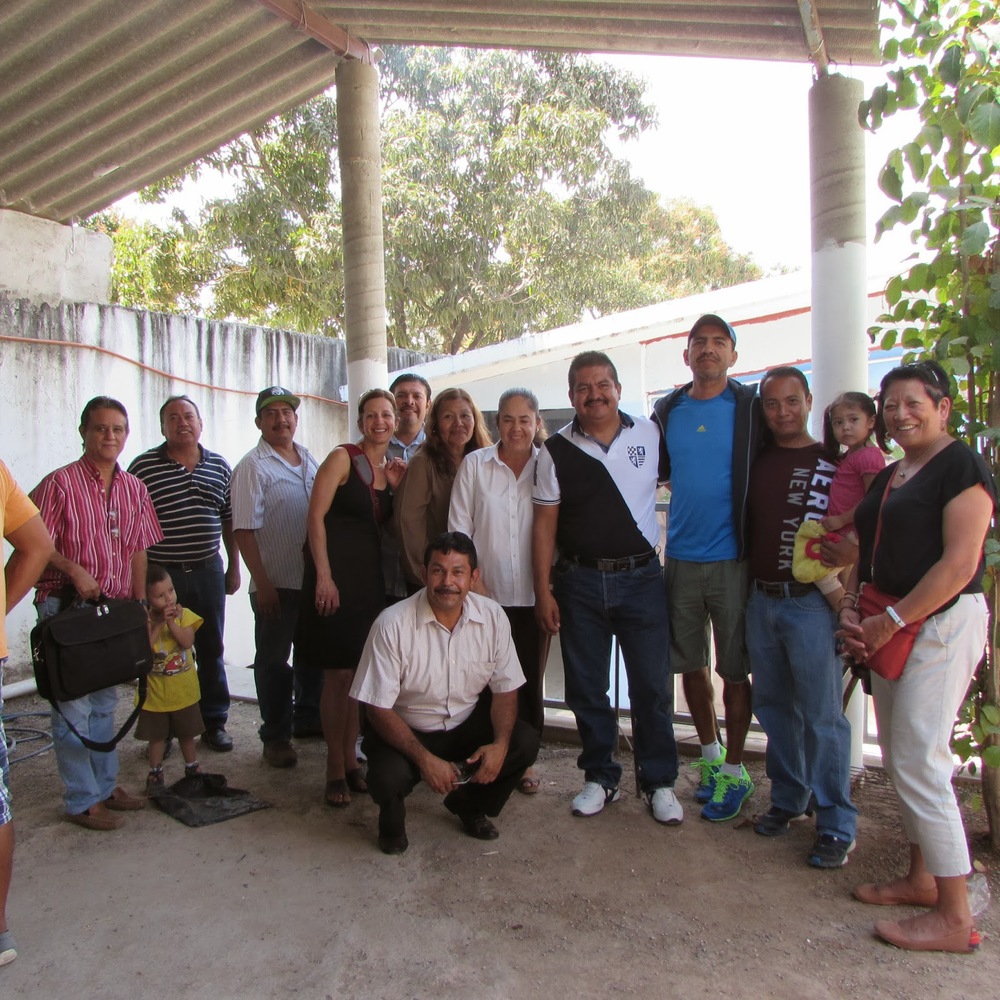
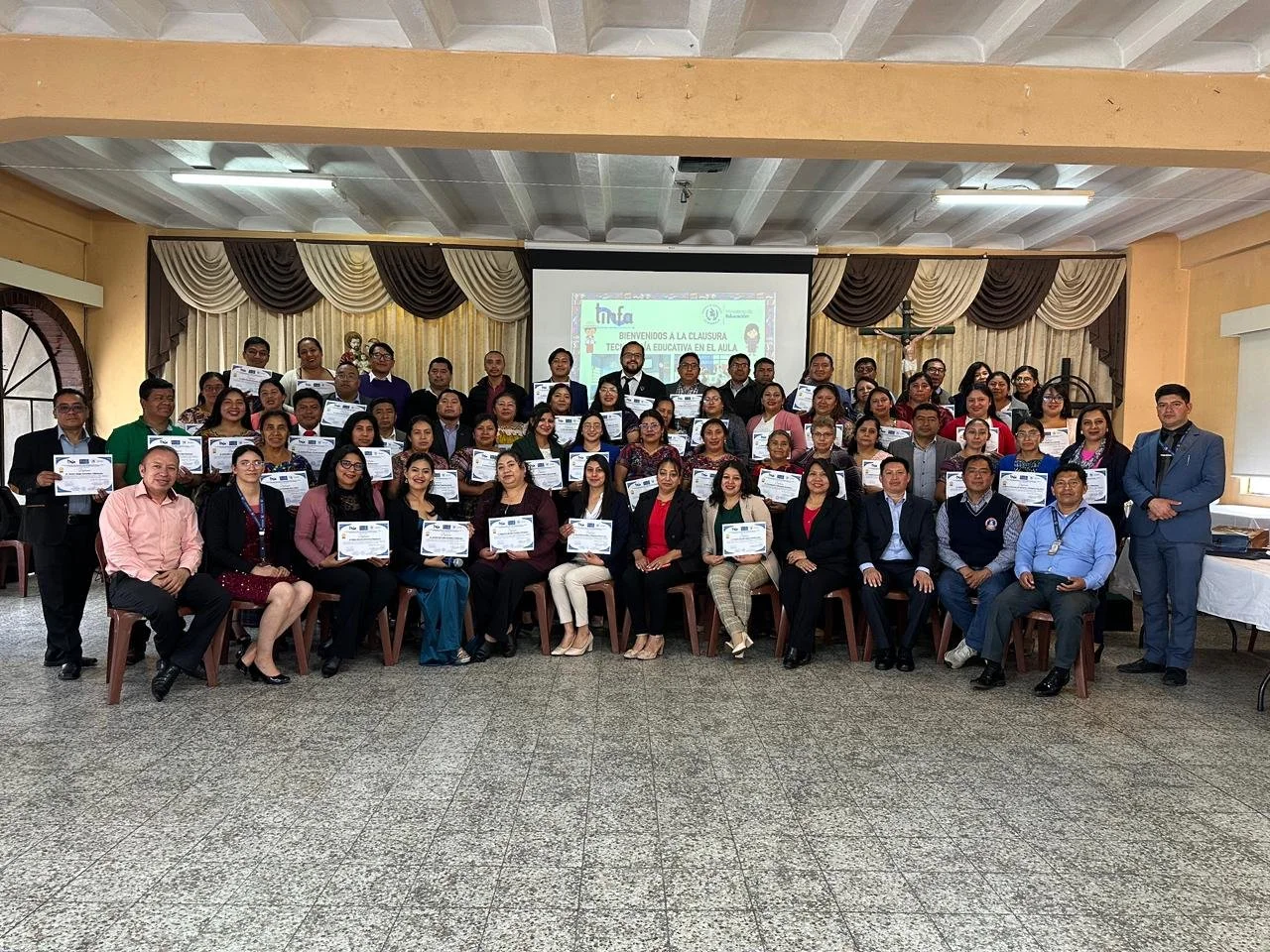
The feedback from the teachers attending the computer training facilitated by TINFA was very positive. Not only did it benefit the teachers of JdlB, but also one Elementary schools teacher from each of the Elementary schools of the district. Thank you to our partner Principal, Juan Montero, for your leadership on this!  

The proud teachers!


We had some good discussions with the teachers related to continuing virtual exchanges  in between the 2 schools. At least 2 to 3 teachers are willing and ready to start on the Mexico side!

I also visited several other schools in the area. (3 primary and 2 middle) and had good discussions with their administration and some of their teachers. There are great potential for additional TINFA partners, as well as additional virtual exchanges with other schools in Seattle.


www.tinfa.org

Virtual Exchange No 2 : Juan de la Barrera (Mexico) and John Stanford International (USA)

Yesterday, we had another virtual exchange in between 4th grade class of Juan de la Barrera Elementary in Jalisco - Mexico and 4th grade class of John Stanford International School in Seattle, USA.

This is the second in a series of four exchanges that these two classes will do together this year. Both classrooms were on Skype, and thanks to the projector that JSIS donated to JdlB, the entire classes on both sides were able to participate. 

The module that we explored this time is "Comparacion de la gente nativa de nuestra region" (presentation and comparison of the native people of our region). This is a culminating activity for JSIS of a 2 month study of the native people of the Northwest, and a module that the school in Mexico has also been studying.

The exchange was entirely in Spanish on both side. 

During this exchange, the students were able to present some of their research on the type of habitat, clothing and food that the native people of their region were using, and compare it to the ones of the natives of the other location (on the same coast line, but over 2,500 miles from each other). 

The exchange lasted approximately 45min. Here are few of the comments the students at JSIS.

"they were talking very fast. It was hard to understand". One of the student said, "i wish I got to know more of the students in the other school". This, we are hoping will happen,  little by little, with these quarterly interactions.

Thank you to Maestra Priscilla and Maestro Everardo for your work on this module. Thank you Michelle , for the technical assistance!

The next module, in April will focus on nutrition.  Stay tuned!

www.tinfa.org

Midway point on Guatemala project

This is the midway point of project in Guatemala and it is going strong! 


The collaboration with our local partner, FUNDAP is enriching and  full of complementary skills.
  • We have identified the 3 pilot schools we are working with
  • We have defined the technology kit that strikes the right balance of affordability and effectiveness.
  • We have installed the kit in each of the schools
  • We have created and provided a setup, usability training and conducted a mockup class for the teachers of the schools
  • We have defined the criteria of measurement (attendance to school, moving to the next grade, repeating a grade, leaving school, as well as attitude towards learning). 
  • We are visiting the schools monthly, to support the adminsitration, listen to teachers on their challenges, train teachers on lesson plans including virtual tools tailored to their need and relevant to their curriculum. 
  • We conduct monthly skype meetings with the schools for technical support, capacity building and follow ups.

In other words, the project is in full speed. More photos to come soon.  

www.tinfa.org