Resilience

 (Photo from http://www.fastcompany.com/)
Today, I went to the Global Washington conference on Global development, here in Seattle. I got a lot out of the conference and am thankful to be in a region so interested in this sector.

If there was one word, for me to reflect on, after this day it would be RESILIENCE.

I knew the opening speaker Deogratias Niyizonkiza, from Tracy Kidder's book "strength in what remains". Deogratias's story of surviving the most horrific genocide in Burundi, getting to Harvard, and starting his own organization, Village Health Works is unique and inspiring. What I did not know, is the struggles that he faced throughout the process, how he moved forward building his first clinic despite having the proper authorizations to start, nor the necessary funding.RESILIENCE.

Sam Daley-Harris, from Result, and whose work I know when I worked at Grameen, challenged us to  get out of our comfort zone. Activists and donors want more than a "one click and a check", which from Daley-Harris 's point of view is what you would expect from kindergarteners. He suggests that we reflect on our own stories of "why" ("I was born twice. The day I was born and the day I found out why"). This gives us the inspiration to move from hopelessness to hope, be more aspirational. Activist and donors want to be treated as capable adults. With the right mindset, a mindset of appreciation , and RESILIENCE (which he specifically spelled out as focus, structure and support)  "that's when the magic happens".

Finally, I had a chance to catch up with friends and acquaintances and particularly Rick from Water for Humans, whom I hadn't seen for 3 or 4 years . It was really neat to hear how his organization has really taken off this year. When asked what made a difference, he believed that it was thanks to couple of key partnership and RESILIENCE.

www.tinfa.org

First virtual exchange of the school year!

John Standford International School (JSIS) , an elementary school in Seattle WA, and Juan de la Barrera (JdlB), an elementary school in PV Mexico had their first virtual exchange today!
7 students from 4th grade at JSIS and the entire class of 3rd grade from JdlB connected through Skype, to share the conclusion of their discussions in class, as it relates to values with family, friends and at school.

Each student presented his/her own findings, and listened to the other school's finding.
Now each class is analyzing the information they received, to  find the differences and similarities.

www.tinfa.org

The equipment is on site!

This week, our local partner organization in Guatemala, FUNDAP, is delivering the equipment to the three pilot schools:
  • One Cellular Internet card,
  • Two  Sony SVE11135 laptops
  •  one projector Epson  S12,
  • one screen EPSON Stula
  • one LG TV
  • Stabilizers, speakers, memories, software. 


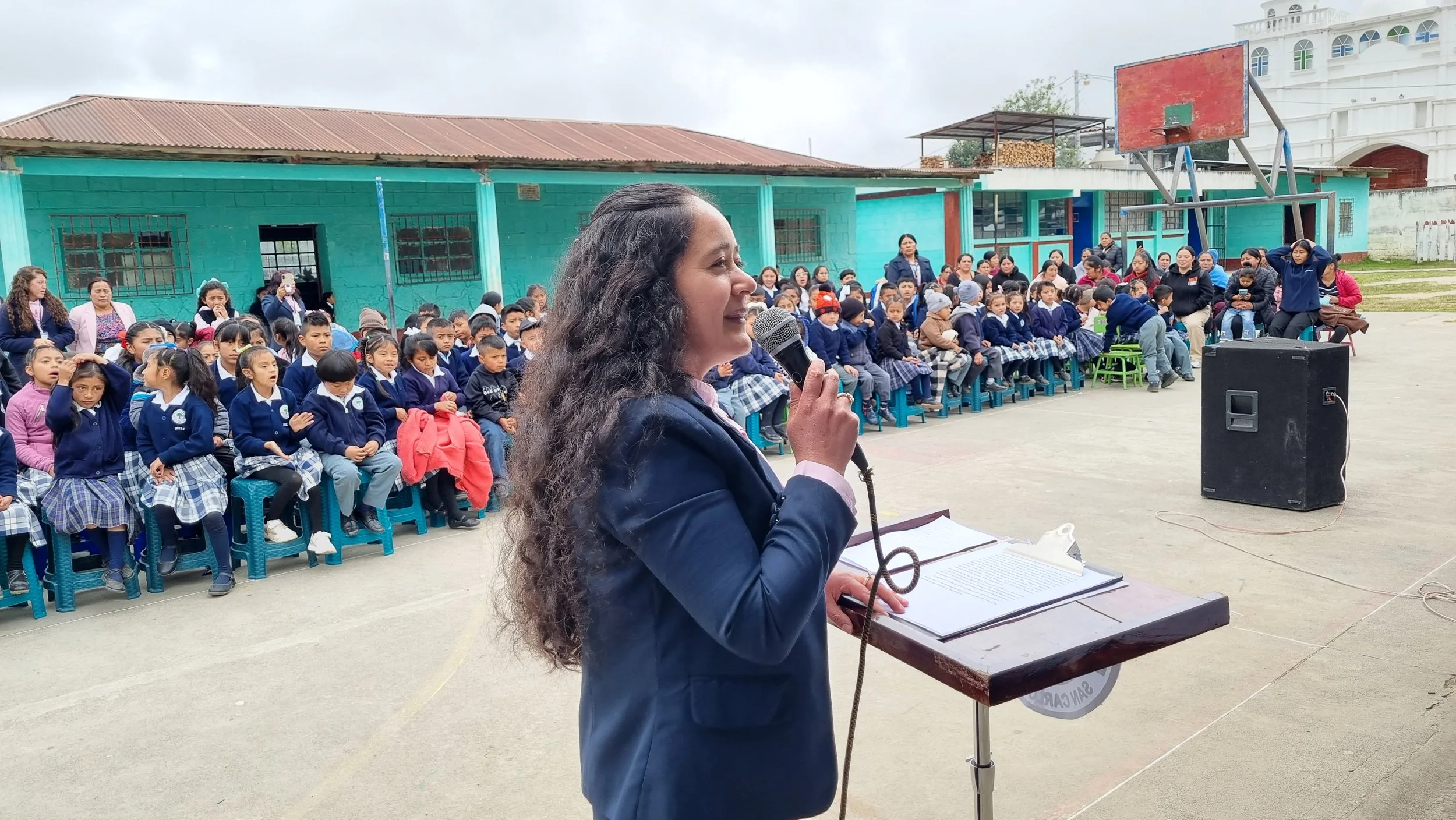
Today I had the opportunity to talk with representatives of the San Marco ‘s school, as they were using their equipment for the first time. The director, the 30 teachers, the parent association representatives and some of the children were talking with me through Skype, about the excitement of having the equipment, the connectivity and the training that FUNDAP will provide throughout the year.


The situation felt disproportionate, but very humbling. This equipment is in such good hands! The first lessons will be around Geography, the use of Google map, to understand continents and where we live.

www.tinfa.org

Schools selected in Guatemala

The project with FUNDAP in Guatemala has launched with the selection of the three partner schools:


View FUNDAP Schools location in a larger map

The criteria that were used to select these three schools are :

Potential for success :
  • Basic infrastructure (secure area for equipment)
  • Basic needs met
  • Internet accessibility
  • School administration leadership. (Vision and values that are common and/or compatible with FUNDAP and TINFA)
  • Flexibility and interest of the teachers particularly as it relates to experimentation, willingness to learn, willingness to use technology.
  • Parent association: is a structure in place in order to reach the entire family.
  • District approval
Potential for learning from the pilot:
  • one small, one medium, one large school


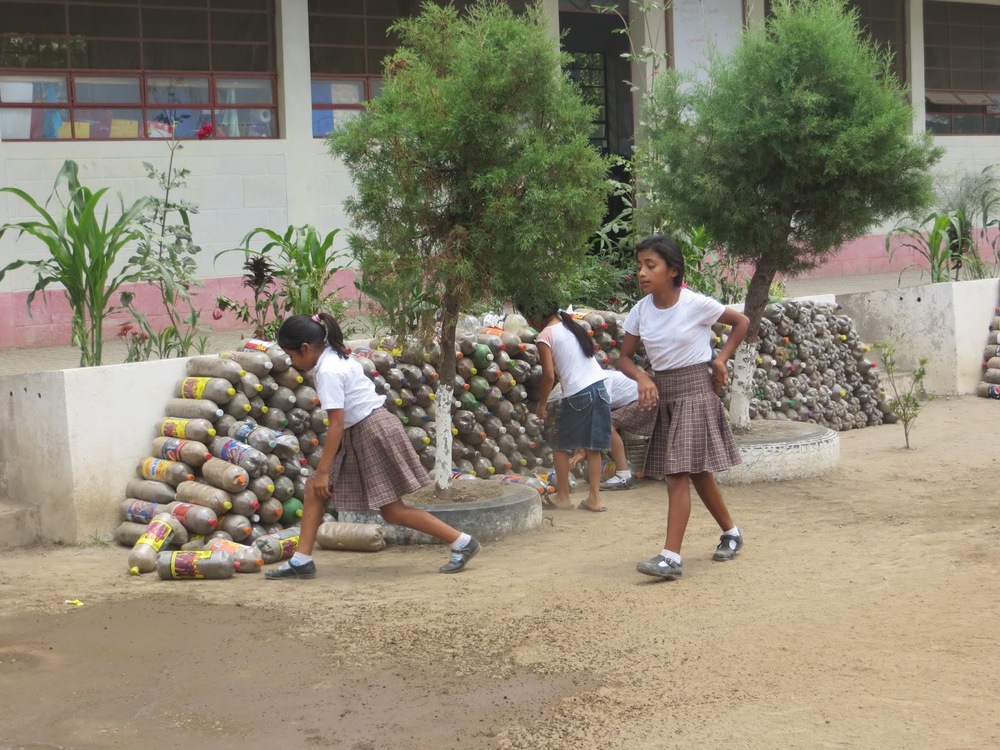
I visited the large school, San Marcos, in February and was very impressed by its leadership. Here a picture of a reuse and recycle project : the school is re-use plastic soda bottles brought from home, filing them up with sand, to make a wall.


The devil is in the details

That's it. We are embarking in an exciting new project/partnership with FUNDAP in Guatemala, working with 3 of the schools they have had a long term relationship with, and pilot the use of technology to enhance the education of 4th, 5th and 6th grade students.

I am very excited that we will be working with FUNDAP. TINFA and FUNDAP have so many shared common values and are bringing to the table such complementary skills. Perhaps I'll go into the details of this in another blog.

The concept of this project is very simple. We believe that a computer, a projector, a screen, an internet connection and a power supply can make a substantial difference in a school if used the right way, taking advantage of amazing programs like the Khan Academy, e-Books or Scratch. 

The HOW is the key. There is nothing fancy about the how, but the "devil is in the details". 

Our goal is to go very deep in understanding the HOW, understanding what in the HOW is essential, so that we can create a model that is replicable. 

For example, the team we are working with at FUNDAP needs to feel 100% comfortable with the applications we are proposing to the schools.  It is essential for the staff to have a thorough training on setting up the system, navigating the applications, troubleshoot some of the common issues, and be advanced users of the applications like the Khan Academy. This is essential, so that they can properly present the opportunity to principal and teachers of the schools. This is essential, so that they can stretch the partners and have deep discussions on their regular visits to the schools. This investment in the staff of FUNDAP is a pilot investment, and a cost that would not occur, once we are talking about replication. 

I am very excited about this project. It is quick starting on July 1st!

Exchange in between schools TINFA supports and schools in the Northwest


The other main area TINFA is involved in, is relationships in between schools, supporting exchanges in between schools that we support and schools in the Northwest. 

We have started this work in 2006 with a yearlong virtual exchange in between Santa Maria in Bogota Colombia, and Coe Elementary in Seattle. 

Last year, our family joined a long standing physical exchange that my children’s school (John Stanford Int’l) had with a school in the outskirt of Puerto Vallarta in Mexico (Juan de la Barrera). This year, I joined the trip again, this time through TINFA and as part of the organizing committee. I have been specifically focused on the interest of the school we are partnering with: 
  • How can we support the strengthening of local capacities, among teachers, among the parent community, in between the administration and the district? 
  • How can the long term current exchange evolve from a punctual week long visit to a continuous exchange? 
  • How can technology support such initiatives?  


TINFA will support the school in Mexico by providing technology training to the teachers for the year to come, as well as coordination engagement for the four virtual exchanges that both schools have defined and are planning on engaging in, during the coming school year.